Last updated 2026-07-27
TL;DR
Store topical dapsone (Aczone) at room temperature, 59-86°F (15-30°C), away from light and moisture, and don't freeze it. Check the tube's printed expiration date before use. Oral dapsone tablets follow standard USP room-temperature storage and usually carry a 2 to 4 year shelf life from manufacture. Never use either past expiration, and never share oral dapsone without G6PD testing.
How should I store topical dapsone (Aczone) gel?
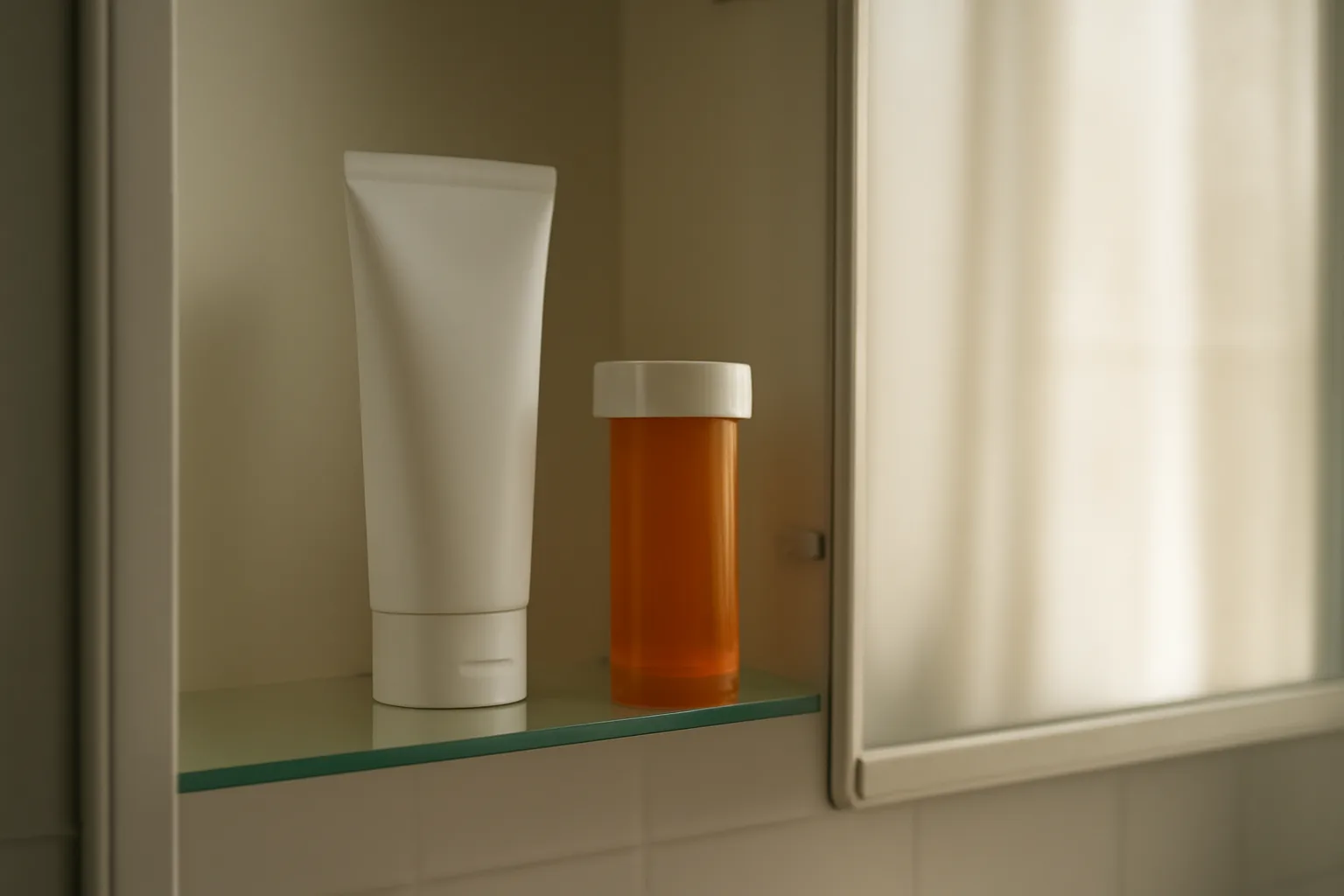
Keep Aczone (dapsone gel 5% or 7.5%) at controlled room temperature, which the FDA label defines as 20-25°C (68-77°F), with excursions permitted between 15-30°C (59-86°F) [1]. That's a normal bathroom cabinet or bedroom drawer, not a steamy shower shelf and not a car glovebox in July. The official prescribing information for Aczone gel states to store it at controlled room temperature and to keep the tube tightly closed after use [1]. Moisture and heat are the two things that degrade topical gels fastest, so a medicine cabinet inside a bathroom with a working exhaust fan is fine, but the shelf directly above a hot shower is not ideal for long-term storage. Don't freeze it. Freezing can change the texture and separate the gel base, which affects how evenly the active drug spreads on skin. If a tube has been frozen or left in a hot car, don't use it. Toss it and get a new one. One quotable rule: room temperature, tightly capped, out of direct sun. That's the whole strategy for topical dapsone storage.
What's the shelf life of Aczone gel after it's opened?
Manufacturers set expiration dates based on unopened, properly stored product, and Aczone's labeling doesn't specify a separate shorter in-use period once opened [1]. In practice, most dermatologists tell patients to finish the tube within the printed expiration window as long as it's been stored correctly and hasn't changed in color, smell, or consistency. A typical Aczone prescription (a 60 gram tube of the 7.5% gel dosed once daily) lasts a few months for most patients, well within any reasonable expiration window. If you have a tube that's been sitting half-used for over a year, it's worth calling your pharmacy to confirm the lot's expiration date printed on the box, since that date, not a generic "12 months after opening" rule, is the reliable marker for topical retinoid-adjacent products like this. Gel that has visibly separated, turned yellow or brown, or developed an off odor should be discarded regardless of the printed date. This isn't unique to dapsone. It's standard advice for any topical gel formulation. For more on what the drug is actually doing in the skin during that window, see what does Dapsone Rx actually do.
Does dapsone gel need refrigeration?
No. Aczone gel is designed for room temperature storage and refrigeration is not required or recommended by the FDA label [1]. Some patients ask this because a handful of dermatology topicals (certain compounded formulas, some biologics) do need a fridge, so it's a fair question, but dapsone gel isn't one of them. Refrigerating it won't harm it outright, but cold gel can feel uncomfortable applying to skin and may change viscosity temporarily. If you accidentally left it in a fridge, let it come back to room temperature before applying. The practical takeaway: a bathroom drawer or bedroom nightstand works better than a fridge door. Produce is different, dapsone gel is not.
How long do oral dapsone tablets last, and how should they be stored?
Oral dapsone (the sulfone antibiotic tablet form, used for conditions like dermatitis herpetiformis and certain infections, not FDA-approved for acne) is typically stored at controlled room temperature, 20-25°C (68-77°F), per standard USP monograph storage conditions for solid oral dosage forms [2]. Manufacturer expiration dating on dapsone tablets commonly runs 2 to 4 years from the date of manufacture, though the specific date is always printed on the bottle or blister pack and that's the one that governs, not a general rule of thumb. This matters more for oral dapsone than for the topical gel because oral dapsone carries real systemic risk. It's a sulfone antibiotic that can cause hemolytic anemia, methemoglobinemia, agranulocytosis, and a severe reaction called dapsone hypersensitivity syndrome [3] [3]. The FDA label for oral dapsone requires screening for glucose-6-phosphate dehydrogenase (G6PD) deficiency before starting therapy, because patients with G6PD deficiency are at sharply higher risk of hemolysis on this drug [3]. None of that risk profile has anything to do with storage temperature, but it's the reason oral dapsone should never be stored loosely, shared, or used past its expiration on the assumption that "antibiotics don't really expire." A study of drugs pulled from the federal Shelf Life Extension Program found many products retained potency well past labeled dates, but that program applies to specific lots tested individually by the FDA for military and federal stockpiles, not to a prescription bottle in your medicine cabinet [4]. Treat the printed date as the real deadline. If you're weighing whether oral dapsone is even the right category of drug to consider, read Dapsone Rx contraindications before anything else, because the G6PD question has to be answered first.
What temperature range counts as room temperature for dapsone products?
USP defines controlled room temperature as 20-25°C (68-77°F), with allowed excursions between 15-30°C (59-86°F) for brief periods during shipping or normal handling [2]. This is the standard reference range cited on most prescription drug labels sold in the US, including dapsone gel [1]. In plain terms: a climate-controlled home or apartment is almost always within range. Problem spots are cars in summer (interior temps can exceed 130°F within an hour, well above the 86°F ceiling), bathroom shelves right above a hot shower head, and windowsills in direct sun.
| Storage location | Typical temp range | Safe for dapsone? |
|---|---|---|
| Bedroom drawer or cabinet | 68-77°F | Yes |
| Bathroom medicine cabinet (ventilated) | 65-80°F | Yes |
| Car glovebox, summer | 100-140°F+ | No |
| Refrigerator | 36-46°F | Not required, avoid freezing |
| Freezer | Below 32°F | No, never |
If a tube or bottle has spent real time outside 59-86°F, especially heat exposure, the safest move is to replace it rather than guess at remaining potency.
Can I use dapsone gel or tablets after the expiration date?
No, don't use either past the printed expiration date. The expiration date on both Aczone gel and oral dapsone tablets reflects the period the manufacturer has actually tested for stability and potency, and neither the FDA label for Aczone nor for oral dapsone specifies extended use beyond that date [1] [3]. For a topical like Aczone, using expired gel mostly risks reduced potency (the drug just works less well for acne) rather than acute danger. That's a mild but real reason to just replace it rather than push your luck for a $20-40 tube. For oral dapsone, expired tablets carry the same reduced-potency risk, but because oral dapsone is dosed to a specific blood level for conditions like dermatitis herpetiformis, an underdosed or degraded tablet is a bigger problem clinically. It can also tempt someone to take extra tablets to compensate, which raises the risk of the drug's more serious effects (hemolysis, methemoglobinemia) [3] [3]. Either way, expired dapsone isn't a product to stretch. Get a fresh prescription.
How do I know if dapsone gel has gone bad before the expiration date?
Look for separation of the gel into layers, a change in color (fresh Aczone gel is white to pale yellow), a sour or chemical odor different from its normal mild scent, or a change in texture (grainy, watery, or unusually thick). Any of these signs means the product should be discarded even if it's within the printed date [1]. These changes usually trace back to storage errors: heat exposure, freeze-thaw cycling, or leaving the tube uncapped for long stretches, which lets air and moisture in. A tube that's been stored correctly and applied consistently should look and feel the same on day 1 and day 90. If you're not sure whether a change is normal batch-to-batch variation or actual degradation, call the pharmacy that filled it rather than guessing.
Is it safe to travel with dapsone gel or tablets?
Yes, both forms travel fine as long as you keep them within the 59-86°F range and out of checked luggage in extreme climates (cargo holds can get cold at altitude and hot on tarmacs). Carry-on storage at room temperature works for most trips. For air travel, TSA guidance states that medically necessary liquids, gels, and creams, including prescription medications, are allowed in carry-on bags in excess of the standard 3.4 oz limit, and that travelers should declare these items to an officer at the checkpoint for separate screening [5]. Keeping tablets or tubes in original pharmacy-labeled packaging helps avoid delays or questions at the checkpoint. For oral dapsone specifically, original labeled bottles also help if you need proof of a legitimate prescription crossing state or international lines. Don't leave either product in a parked car, checked bag near cargo heaters, or direct sun on a hotel windowsill. A day or two of moderate heat exposure (say, 90°F for a few hours) probably won't ruin a tube, but repeated extreme exposure will degrade it faster than the label's testing accounted for.
Does dapsone gel or tablets need to be kept away from light?
Manufacturer storage instructions for Aczone specify controlled room temperature but don't call out a specific light-sensitivity warning the way some drugs (like certain injectables) do [1]. Still, most topical gels benefit from staying in their original opaque tube rather than being transferred to a clear container, simply because UV exposure and heat often travel together (a sunny windowsill is both hot and bright). Oral dapsone tablets are typically packaged in amber pill bottles or blister packs, which is standard practice for tablets that could be light-sensitive on prolonged direct exposure, though the core storage requirement remains temperature and dryness, not darkness specifically [2]. Bottom line: keep both in their original packaging. It's simpler than trying to remember custom rules for light versus heat versus humidity.
What's the difference between topical and oral dapsone that affects storage and risk?
Topical dapsone (Aczone 5% and 7.5% gel) is FDA-approved specifically for acne vulgaris and works locally on the skin with minimal systemic (whole-body) absorption [1]. Oral dapsone is a sulfone antibiotic tablet approved for conditions like dermatitis herpetiformis and leprosy (Hansen's disease), not for acne, and it works systemically through the bloodstream [3]. That systemic action is exactly why oral dapsone carries the serious risk profile: hemolytic anemia, methemoglobinemia, agranulocytosis, and dapsone hypersensitivity syndrome, a rare but potentially fatal reaction involving fever, rash, and organ involvement [3] [3]. The FDA-approved label for oral dapsone states the drug requires G6PD deficiency testing before treatment because "hemolysis is dose related and patients with glucose-6-phosphate dehydrogenase (G6PD) deficiency...are more prone to develop hemolysis" [3]. Storage-wise, both forms just need standard room temperature protection. But it's worth being explicit here because a fair number of people searching "dapsone for acne" land on information about the oral drug and don't realize it's a different risk category entirely. If your dermatologist has prescribed the topical gel, you are not taking on the oral drug's hematologic risks. If you or a family member has been prescribed oral dapsone for something else, that G6PD test is not optional paperwork; it's the single most important safety step before the first dose [3] [3]. For the regulatory side of this distinction, see is Dapsone Rx fda approved and Dapsone Rx legal status.
Where can I get dapsone gel with proper guidance on storage and use?
A licensed prescriber can confirm whether topical dapsone gel fits your acne, review any G6PD or drug interaction concerns if oral therapy is ever on the table, and make sure you're getting a legitimately sourced, correctly labeled product with a real expiration date rather than a repackaged or gray-market tube of uncertain age. Dapsone Rx connects patients with provider-reviewed evaluations, and prescriptions for topical dapsone are filled through a licensed pharmacy partner, so what arrives has a manufacturer expiration date and storage instructions printed right on the box, not guesswork. For dosing schedules that affect how much product you'll actually use before it expires, see Dapsone Rx half life, and for a rundown of who should avoid the drug entirely, see Dapsone Rx contraindications.
Frequently asked questions
How long does an unopened tube of Aczone gel last?
It lasts until the manufacturer's printed expiration date, as long as it's stored at controlled room temperature (59-86°F) and kept away from freezing and excess heat. That date is set by FDA-reviewed stability testing specific to the formulation, so always check the box or tube rather than assuming a standard 1-2 year rule.
Can dapsone gel be stored in the bathroom?
Yes, a bathroom cabinet or drawer works fine as long as it stays within roughly 59-86°F. Avoid shelves directly above a shower where heat and steam concentrate. A ventilated cabinet away from the shower is a safer spot than an open shelf near the showerhead.
What happens if dapsone gel freezes?
Freezing can separate the gel base and change its texture, which may affect how the drug spreads and absorbs into skin. Discard any tube that has frozen; don't try to thaw and reuse it, since there's no reliable way to confirm it's back to its original stable formulation.
Does oral dapsone require special refrigerated storage?
No. Oral dapsone tablets are stored at standard controlled room temperature (68-77°F), the same as most oral prescription tablets, per USP storage conventions. Refrigeration isn't required and isn't typically recommended on the label.
Why does oral dapsone require a G6PD test but topical dapsone doesn't?
Oral dapsone is absorbed systemically and can trigger hemolysis (red blood cell breakdown) in people with G6PD deficiency, an enzyme deficiency affecting how red cells handle oxidative stress. Topical Aczone has minimal systemic absorption, so the FDA label doesn't carry that same testing requirement for the gel form.
Can I use dapsone gel that's past its expiration date if it still looks normal?
It's not recommended. Past the expiration date, potency isn't guaranteed even if the gel looks and smells fine, since visual inspection can't detect chemical degradation of the active ingredient. A tube costs $20-40 out of pocket at many pharmacies; replacing it is cheaper than risking a course of treatment that underperforms.
How should I dispose of expired dapsone, topical or oral?
Use a drug take-back location or DEA-authorized collection site when possible. If none is available, the FDA's flush list doesn't include dapsone, so mix tablets or gel with an unappealing substance like coffee grounds, seal in a bag, and put it in household trash, per general FDA disposal guidance for non-flush-list medications.
Is dapsone gel the same thing as oral dapsone for acne?
No. Topical dapsone (Aczone 5%/7.5%) is FDA-approved for acne and works on the skin's surface with minimal absorption. Oral dapsone is a systemic sulfone antibiotic approved for conditions like dermatitis herpetiformis, not acne, and carries serious risks including hemolysis and agranulocytosis that the topical form doesn't share.
How long can dapsone gel sit in a hot car before it's ruined?
There's no official cutoff, but car interiors can exceed 130°F within an hour in summer sun, well past the 86°F upper limit for controlled room temperature storage. A brief errand probably won't destroy it, but repeated or extended exposure is a real risk to potency, and a compromised tube should be replaced.
Does dapsone gel expire faster once opened compared to unopened?
The FDA-approved Aczone label doesn't specify a separate shorter shelf life once opened; the printed expiration date is the reference point either way, provided the tube is kept tightly closed and stored properly. Watch for separation, odor change, or texture change as practical signs of degradation regardless of date.
Can pharmacists tell me the exact expiration date for my dapsone prescription?
Yes. The lot-specific expiration date is printed on the box or bottle your pharmacy dispenses, and pharmacists can confirm it by checking the label or their dispensing records if the printed date has worn off or is unclear.
What storage conditions does the FDA require Aczone to be shipped and sold under?
Aczone's FDA-approved prescribing information specifies storage at controlled room temperature, 20-25°C (68-77°F), with permitted excursions to 15-30°C (59-86°F), the standard USP range used for most solid and semisolid prescription drug products in the US.
Sources
- FDA, Aczone (dapsone) gel 7.5% prescribing information: Storage instructions and controlled room temperature range for topical dapsone gel
- USP, General Notices and Requirements, controlled room temperature definition: Standard USP definition of controlled room temperature and allowed excursions for oral solid dosage forms
- FDA, Dapsone tablets USP 25mg/100mg prescribing information (NDA 017879): G6PD deficiency screening requirement and hemolysis, methemoglobinemia risk for oral dapsone
- Lyon RC, et al., "Stability Profiles of Drug Products Extended Beyond Labeled Expiration Dates," Journal of Pharmaceutical Sciences, PMID 16752381: Federal Shelf Life Extension Program data shows extended potency applies to specific tested stockpiled lots, not general consumer prescriptions
- TSA, "Can I travel with my medication?" guidance: TSA allows medically necessary liquids and gels including prescription medications beyond the standard liquids limit in carry-on bags